Tuesday, 9 February 2010

Swears

I'm doing jury service at the moment. And the courts are full of spiritual connotations. If it's not bowing in reverence, or calling judges 'Lord' or 'Worship' it's the very presence of an advocate interceding on behalf of someone else. Mind you, it's hardly a surprise that an environment built to house truth and justice should remind me of God.

However, what's most striking is the spiritual barometer of trustworthiness, the swearing of an oath on the Bible.

'I swear by Almighty God that I will faithfully try the defendant(s) and give a true verdict (true verdicts) according to the evidence.’

All those on my jury chose to do this. I didn't.

And you may think that's quite strange given that I am a Christian, that I believe in a personal relationship with God and that the Bible is a phenomenal tool for equipping us to live to our potential (actually irrespective of whether you have faith or not).

I don't know whether the 11 people who swore on the Bible would describe themselves as Christians. If they wouldn't then it seems a little strange to start court proceedings with what amounts to a falsehood (not that this is an accusation of perjury!).

It might make the Daily Mail weep but I just don't understand the reason for having a spiritual barometer of trustworthiness. And the reason for that is because Jesus tells his followers that oath taking, that swearing by heaven or by God isn't necessary.

The Sermon on the Mount is one of the most well-known chunks of Jesus' ministry (and another one of those moments in the Life of Brian where the two figures are demarcated). In amongst the Beatitudes and a warning about our thoughts rather than just our acts Jesus talks about oaths.

Again, you have heard that it was said to the people long ago, 'Do not break your oath, but keep the oaths you have made to the Lord.' But I tell you, Do not swear at all: either by heaven, for it is God's throne; or by the earth, for it is his footstool; or by Jerusalem, for it is the city of the Great King. And do not swear by your head, for you cannot make even one hair white or black. (Matthew 5:33-36)

And why shouldn't, as followers of Jesus, we take oaths? Because Christians should 'let your 'Yes' be 'Yes,' and your 'No,' 'No'; anything beyond this comes from the evil one'.

Part of being a Christian is being trustworthy, of having integrity, of being credible and living a life that reflects the person of Jesus (or tries to). This is what Jesus is saying. He's saying if you follow my teachings then you don't need to swear oaths to make a promise. If you promise to do something, why would you do anything other than keep it?

When I said I was affirming there was slight confusion about what that meant. Someone said it was "for those who aren't religious". Obviously, for me, it was actually for completely the opposite reason.

If the court system was to lose the spiritual barometer for trustworthiness there would be OUTRAGE and it would be further evidence of a creeping secularism. Would it? Wouldn't it actually be Christians recognising that it's in conflict with what we believe and for those that don't have a relationship with God, or even any faith in Him, creates a situation that may actually ring hollow?

Friday, 15 January 2010

4 Cs for #cnvrstns in 2010

This week has seen the 2010 restart to our church, Conversations, and another new venue. Vodka Revolution might be a surprising venue for god-bothering, it might not be an obvious place for people to worship God and enjoy fellowship with one another but on the basis of this week it's going to be a great location. There was an air of excited expectancy amongst those of us who were there on Wednesday evening and a real buzz around the venue and its public that had been lacking in some of the other places we've been.

One of the things that's integral to the way we 'do church' as Conversations is not to leave our relationships at face value in services but to be active in supporting, praying, encouraging and seeing each other during the week. One of the ways we do that is through cell groups. That's not cell in its negative connotations but in the organic sense - following the imagery of the Body of the Christ and recognising that we hope to grow and eventually multiply from one to more.

Thursday nights are cell night and it was great to have fellowship with each other over food wonderfully prepared by Mrs Wellers. As we digested we chatted about what the coming year might look like. The upshot of this, in a delayed New Year Resolution styleee, was commitments around 4 Cs (only because Christians need alliterative groups of cheesy words, not because we're sticklers for grammatical accuracy):
  • Our Celves (I did warn you)
  • Our Cell
  • Our Church
  • Our City
One of the amazing things about cell is the space it allows us for accountability, relationships and confidentiality so I'm not going to blog about those except to say that together we're going to support each other in continuing the commitments we wanted to make for ourCelves and revisit them as the year progresses.

We've committed to making our cell work, to ensuring that we meet for cell but beyond that we are a community, not just people that meet up once a week.

We're committed to our church, to supporting the work it does in prayer and by turning up but also in making sure that the welcome we've had is true of the experience for anyone else who visits on a Wednesday night.

And in doing this we're committed to York, to our city, to loving it and supporting it and encouraging it. By more prayer, through the work of Besom and Street Angels and in being a credible and relevant example of Jesus to those around us.


If you're around us hold us up to those standards, help us to get the balance right between being part of Conversations, part of our cell and part of our city and challenge us if we're falling short of these standards.

I have a funny feeling that 2010 is going to be a good year. Exciting.

Sunday, 10 January 2010

How to get BBC Travel updates via RSS using Yahoo Pipes

Here's a bit of a departure from my normal blogging content, sporadic though it is.

I've just been at university and while I was there I got an email from a colleague asking about good examples of transport content for local government websites. I didn't throw the query out to Twitter particularly well as the responses I got were about examples of dynamic travel news such as the Highways Agency Clearspring/GovDelivery widget or Godalming's repurposing of the same content to give geographical proximity.

Yesterday I was looking at how I might get back to York because of the weather. During the afternoon's lecture, cursing my stupidity at not leaving at lunchtime, I visited the BBC and discovered, to my surprise that their traffic details offer nothing in the way of subscription.

With plenty of time on trains, platforms and coaches to tinker I thought I'd see if I could manage to do something about that. The terms of the BBC's travel feed are that they are for personal and non-commercial usage so if you want to be able to get the latest information for yourselves then here's how to do it very simply.


Visit this Yahoo Pipe, enter the relevant locality or service and click Run. The wonderful thing about Yahoo Pipes is that it will then give you an RSS feed, or with a quick click of a button a badge you can put onto your own blog.

But maybe you want to get to grips with what's going on behind the scenes, so here's a quick introduction to the world of Yahoo Pipes.

Now, I love technology and have some basic knowledge about php, html and css that's faded over time but I've found Pipes to be a brilliant tool for doing a whole host of things. This might not be perfect but it does work! Obviously the BBC don't want this stuff being used commercially because they pay for it but if you'd like to build this pipe yourself here's how I did it.

Step 1
The first thing to do is extract the data from the BBC. The irony is that the BBC actually use RSS to populate the page but don't expose it for syndication. The format of the feed is http://www.bbc.co.uk/travelnews/local/york.shtml. 'york' is the only part that changes for each different feed.

Step 2
So we need to build that URL. To do that I created a new pipe and selected User inputs > Text input. The 'name' field designates what these things will be called; the 'prompt' is the text displayed alongside the empty entry boxes when you run the pipe; the position organises where the input is displayed; the 'default' is what the field contains automatically; and 'debug' is the content used by the pipe in its design state when you're testing it.


Step 3
This provides the area information, in my case york. The BBC feed needs to have .shtml added to the end so we use String > String Builder (and the Highways requires .xml and follows the same principles). We need to connect the String Builder to the Text input box and this is where the name 'pipes' comes from. By clicking on the circular connector and dragging it to another it will connect, or wire, them together. Having done that click the '+' to add another part to the string, the .shtml or .xml.


Step 4
Now we can finish the URL itself. To do that we need URL > URL Builder.

The 'base' is the URL we're tacking the string we've created onto. For us this is:
http://www.bbc.co.uk/travelnews/local and
http://www.highways.gov.uk/rssfeed

The 'path elements' is what we've just made, so wire them together. In this instance there are no 'Query parameters' so just ignore that part.


Step 5
Having got the source data URL we need to fetch it. The Highways Agency is already in the right format so we need only use Sources > Fetch Feed and wire it into the URL. For the time being nothing more needs to be done to the Highways Agency feed so we'll come back to it.

The BBC content is more complicated. We need to fetch the page Sources > Fetch Page and then cut the information from within the page. First of all we wire the URL and the URL Builder together. Having looked at the source of the page the information we're interested in is between these two pieces of html: and . So we cut content from one, to the other.

Because the page is structured using a table each individual piece of information is within a table row, or and so (the end of each table row) is our 'delimiter' (the term that separates one piece of content from another.


Step 6
This is where things become considerably more complicated but I'll try to explain it as simply as possible. Add an Operators > Regex module (short for Regular Expression), this takes a piece of code and, according to what you tell it, will repurpose it. The data from the BBC is written to be displayed as a website, not as a feed so contains html and other formatting information. We want to get rid of it.

So, 'item.content' needs tidying up. This piece of regex module removes formatting instructions such as bold, italic and font size. In all cases we want to remove any mention of them so tick the 'g' for 'global matching'.

The other thing we want to remove is the initial code that labels each table row with a unique reference that ends : name="3469238">. The regex '\">' removes everything until it comes across the exact combination of "> and so takes that initial code away.

In the image you'll see checkboxes marked g, s, m and i. Most of the g boxes are ticked this allows global matching, so all instances of a string are covered.


Step 7
Now the content needs to be made into a series of separate parts. We do that using the Operators > Rename. Doing this splits the content into 'title', 'description' and 'time' so that we can duplicate the information and build the final items for our feed.


Step 8
Having created those some more regex is required to restrict the content of each part. You have to analyse the source to see where the breaks, or the changes need to be made. I was using the most basic regex '.+', the full stop represents any character and the plus sign refers to any number of the preceding character.

I decided to extract the severity image, Road Name and Location as the title. The way the source code was written meant this required removing everything after the first line break (<BR>). The regex to do this is <BR>.+.

The item.description was next up. The relevant data was separated in the code by a line break preceded by a space ( <BR>), the regex was consequently ".+ <BR>". The second thing I did here was remove an errant comma.

I also wanted to pull out the time of the update so that the feed can be sorted at the end. This data could be separated from the remainder of the content by a double line break (<BR><BR>). The regex for this was .+<BR><BR>.

On this occasion, the s check boxes are marked. These allow the '.' to match across newlines which is needed with this data because the html source code of the BBC page is split across a lot of them.


Step 9
As far as I understand RSS, which isn't particularly technically, they need a pubDate in order to publish properly and to sort. At the moment the feed doesn't have one. However, what was just done to item.time has put it into an acceptable format so by renaming item.time to item.pubDate this will work and allow a way of sorting the feed to make sure the most recent content is seen first.


Step 10
The module Operators > Union will bring multiple feeds together which means wiring up the original Highways Agency feed and the Rename module.

Step 11
Operators > Sort takes both those feeds and sorts them. In this instance by item.pubDate and in descending order (most recent first)

Step 12
And that's it, you can wire it all together and publish the pipe. Click save and then run it.


Hope that's useful to someone! While it works there may be better ways of doing it so if you can help me learn how to do that I'd be very interested.

Monday, 16 November 2009

Christian Freedoms

Yesterday we prayed for the persecuted church and Songs of Praise featured Open Doors. The figures on the number of Christians who face real, life-threatening persecution are staggering (just browse the Open Doors site). Yet the words of a lady too scared to be identified demonstrated an incredible depth of faith in a personal saviour when asked why she didn't just deny being a Christian

Life is good but nothing compared to the beauty of Jesus

Her story was one of living under the attack against freedom to worship. A human right, by the way. We are incredibly lucky in the UK not to fear oppression and persecution like hers. However, events like this suggest something different:
"GOSPEL FREEDOM UNDER ATTACK"
Many Christians are concerned at the marginalisation of Christianity which is increasingly being experienced in society today. The case of the Christian nurse disciplined for praying with a patient, the school receptionist disciplined for asking her friends to pray for her daughter told off for sharing her faith with another child, the Equality Bill likely to force churches to accept homosexual youth workers, the hotel owners charged with a crime because they discussed their faith and criticised Islam to a Muslim guest who asked about Christianity - the list goes on.
The things listed there are problematic, that I'm not disputing, but they're not couched in the person of Jesus. I don't know all the details, it's just enough of an outrage to make you gasp and shake your heads. And I don't suggest we're immune from threatening behaviour but so are those of other faiths, or lifestyles. Where are the similar concerns about that?

The friction apparent in that list, most of which seem ludicrous rather than threatening, is a consequence of being in the world, but not of it. Gospel Freedom is living life to the full as citizens of heaven. We're called to model salvation, not to create and enforce Christian states, or Christian societies. So there's space for conflict.

Pluralism, the space for people to get on with what they believe and living how they wish (within societally agreed boundaries) is Christian freedom writ large. In fact, we really want to take it further because by default we love.

That's more than tolerating difference. And it isn't about expecting behaviour to sit within our beliefs or else. We do not get to choose rejection over love. But it's that freedom - to choose rejection over love - which people believe encapsulates our faith. That's the sound they hear above the noise.

Perhaps Britain is a Christian nation, it's probably not, but it definitely is home to people who disagree with our whole belief structure; it's home to people who think we're dangerous and deluded; to those who have been hurt by our hypocrisy and home to those bemused by the righteous anger we whip up towards semantics, language and individual lifestyles.

Just google "Christian Institute" to see the opinion of the world. Sadly, the apparent freedoms seen by the outsider aren't about Jesus. And yet, everything we do should be about Him, and about those out there, not us in here.

If freedoms are under such threat why do we try so hard to keep our cocoon intact? To build Christendom-on-sea where we don't have to make allowances for people that don't think like us. When the Church isn't engaged with the world it's revelling in sub-culture. When we revel in sub-culture we get sidelined by the world, it's inevitable. Mind you, if freedom is our passion where's the problem? If we marginalise ourselves, we vacate the moral high ground, we lose relevance as a spiritual reference point and become complicit with the development of the dreaded secularism.

As Christmas approaches and people attempt to avoid offence (Dundee, that would be you) should we not be celebrating that people go out of their way to avoid offence, because of love and respect for others? What happens instead is OUTRAGE and the (deliberate) misconstruing of events to make headlines. Just how insecure are we that we can't cope with the loss of a word?

The more we build sites like christianchirp.com, hold holy climate events (sorry St Mike's) that clash with the worldly (Friends of the Earth) and put No-shave-November up against Mo-vember (Edinburgh CU are doing it for Compassion, who are awesome, but still) the more Christian freedom looks like an invitation to an exclusive club, not a relationship that will transform you, your life and your community.

The day we are prevented from living with that freedom is when we can start to identify with our brothers and sisters who face prison, torture, rape and death. That is an affront to freedom, full stop. Surely any distinction of 'Christian' freedoms as something distinct is unhelpful anyway. It wasn't 'cos God loved Christians, or the church, that he sent Jesus; it was 'cos he loved the world.

Sunday, 1 November 2009

So It Begins

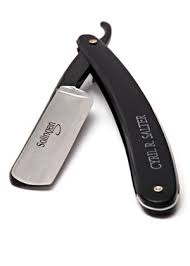
Today I went to this shop

Where a man used something like this


To leave me shaved and ready for the start of Movember.


Friday, 30 October 2009

Hugh Bayley on 10:10

On October 21st the Lib Dems asked their fellow MPs to commit Parliament to reducing its carbon footprint by 10% by the end of 2010, following a huge wave of support that saw almost 10,000 emails in 48 hours and 96% of MPs receiving a phone call asking for them to support the campaign.

In the event Labour stymied the vote with the Noes containing only a solitary DUP member and a sea of Red. I had emailed my MP, Hugh Bayley, asking him in the first instance to personally commit to the campaign and subsequently to support the motion brought before the house.
Sadly Hugh voted with the rest of his party (save for the twelve noble exceptions) in rejecting Simon Hughes' motion and not committing Parliament to a 10% reduction by the end of next year.

To say I was disappointed was an understatement, particularly from an MP who has been so prominent within International Development (the world's poorest suffer the most from a changing climate) so it was with interest that I received his response in the post (no postal strike impact here as yet).

On the personal front he's in.

I shall work to reduce my personal carbon consumption by 10 per cent in 2010 compared with this year. It is important for MPs to practice what they preach, so I will report on how well I do on my website at www.hughbayley.labour.co.uk as 2010 progresses.

However, he did not vote for the motion because

I did not support it because it included an unrealisable commitment for Parliament to cut its emissions by 10 per cent in 2010. I wish the Houses of Parliament were in a position to make and implement such a pledge, but I am afraid we are not.

The House of Commons Commission, a committee of six senior MPs, had discussed 10:10 on the Monday before concluding that it was impossible to speed up or add to the we work of emission cutting to achieve 10 per cent in 2010.

Fair enough, the reason we didn't see Parliament adopt 10:10 was because they didn't want to make a promise they couldn't keep. Given the last 12 months that's not a stupid decision, in Hugh's words

the Commission is right not to make a promise it feels it could not keep. If it did so it would increase public cynicism about Parliament and politicians

However, what's revealing is the letter that Hugh Bayley sent to the Commission. In it he lists 10 things. I'll let you make your mind up over whether or not these are achievable and leave you to the incredulity that behaviours within Westminster should be so blase...

  • Every kitchen on the estate should be equipped to recycle paper, plastic, glass and cans. Currently, this is not the case
  • Food waste - rotting food waste contributes massively to our greenhouse gas emissions. We could consider ways to start recycling this
  • I have noticed walking around the Parliamentary estate that radiators are turned up to maximum temperature, with the windows open. There should be a cap to ensure the temperature on radiators is only as high as we need, and cannot be turned up.
  • We should have a 'lights off' policy and should install more movement-sensitive timers so that lights are not left on when rooms and corridors are not in use
  • We should be encouraging staff to turn their computer monitors and printers off when not in use
  • The monitors around the estate remain on throughout recess, and when the House is not sitting. This is unnecessary and they should be turned off if there is no business to display
  • Most plastic does not biodegrade and this is very damaging to the environment. The House should limit the use of plastic where possible. For example, we could switch to using takeaway wooden cutlery instead of plastic, and encourage people to use their own mugs, or biodegradable cups instead of the plastic filmed paper cups
  • The House of Commons gift shop could adopt a no plastic bag policy, and instead use paper bags
  • We should go back to providing tap water, and not bottled water in meetings
  • We should switch to environmentally friendly cleaning products, which are less polluting than chemical products.


Thursday, 13 August 2009

Justice

Two years ago I spent some time in Sierra Leone researching my Masters dissertation. According to the UNDP’s Human Development Index it's the poorest country on the planet. The conflict that tore that country apart is a harrowing story of child soldiers, brutal amputations and destroyed communities. My dissertation examined the gap between the ‘peace’ of Special Courts and Truth & Reconciliation Committees (TRC) and the reality of that ‘peace’ as experienced by men, women and children without homes or prospects and carrying the scars of the conflict.


Central to that debate was justice. On the one hand the belief that criminal justice equates to peace and in stark contrast the reality on the ground. The work of the Sierra Leone Red Cross Society addressed the needs of lives torn apart by conflict by seeking advocacy and reconciliation, particularly on behalf of child soldiers.


The consequence was not communities that rejected these men and women, often guilty of heinous crimes, but to actively engage in reconciliation and the rebuilding of their lives together. Clearly it wasn't enough to try Foday Sankoh or Charles Taylor. Not only did everyone know that those indicted were guilty but most of them died prior to facing trial. So what did attempted legal restitution achieve? The lives of those I met were being pieced together by people getting together, talking and forgiving before moving on as a restored community.


This is the poorest and the least developed country in the world recovering from untold evil. Not by punishing the people responsible for those crimes but actively welcoming them back into their midst. Very challenging.


The reason this is brought to mind is the recent media attention surrounding Ronnie Briggs, Peter Connelly and Abdelbaset Ali al-Megrahi. Briggs has been released from prison on compassionate grounds and it’s being suggested that the same thing should be possible for al-Megrahi whilst the identities of those involved in the death of Peter Connelly have this week been made public. Alongside those pictures have been discussions about giving them new identities when they are released from prison, causing outrange at the waste of taxpayers’ cash.


Predictably there are loud voices of dissent. And it's the same whenever someone is sentenced for a high profile crime. Wherever there is the pain of loss, those responsible need to suffer in a way that ‘fits the crime’. But what punishment ever truly fits a crime on that basis? Is it like for like? One life for another?


I question whether that is a justice that gives peace? If our response is to require someone to suffer in our stead it doesn't stop our pain or make us feel any less raw. The more you punish,the more you pursue an impossible criteria for restitution. And so we’ve developed an incredibly sophisticated justice system that provides an agreed standard of societal justice. The British hand over responsibility for justice to those who have spent their lives studying the law and analysing defendants. On our behalf, and speaking for society, these men and women declare what punishment is appropriate and what justice is.


But then we can't accept that it has atoned for the crime.


Because the issues aren't just with sentencing, they're at release too. When granted freedom ex-cons have atoned for their actions in the eyes of the law (and by extension the rest of society). It doesn’t matter whether or not they’re unrepentant, or seek restitution and reconciliation with those they’ve hurt because that’s beyond the remit of a secular justice system. Except that we don't see it that way. Former prisoners face barriers to engaging with society, which some would say should be expected. But aren't those barriers only going to perpetuate those destructive behaviours? When Tracey Connelly, her picture widely publicised, leaves prison she will do so into the arms of a society ready to exact vengeance on her son's behalf.


Even though justice will have been served.


Not justice in terms of what some would demand but on that day she will have done what the state demands to provide restitution to the population of Britain.


If on that day she requires a new identity it will be because the papers who first bemoan her sentence and then her false identity are the same people who give credibility to a position that says ‘the justice system is broken, it doesn’t go far enough and she needs to suffer for what she did’.


Fundamentally, British society believes that there’s something people have to do to make themselves right with us; some standard of acceptability to achieve; or some punishment that resolves the past in order to change the future.


I don’t believe that.


I found Sierra Leone an incredibly challenging experience for a variety of reasons but fortunately we don’t have to visit West Africa to see life changing behaviour in action. Gee Verona-Walker, the mother of Anthony Walker, forgave her son’s killers. She knew that carrying the pain did nothing. She knows that it is no disrespect to the memory of her son to celebrate his life rather than searching for a potentially non-existent criteria for satisfaction.


As a Christian I fundamentally believe that lives do not have to depend on histories. And I believe that forgiveness, true past-forgetting unconditional forgiveness can heal anything. Impossible? Perhaps. Hard? Certainly. But the things that I believe rotate around that central, crucial, life transforming principle.